
When Should I Take My Pond Fountain Out for Winter?
If your pond freezes, take your floating fountain or surface aerator out before the ice forms. Kasco, the maker of the units we carry, recommends pulling a floating fountain or aerator for the whole winter in cold areas where the pond gets more than an inch or so of ice, and doing it well before the freeze, not after. A fountain left in a pond that freezes can end up with ice damage to the float, the motor or the cord. Once it is out, you clean it, store it, and if you still want open water or oxygen, you swap in a winter setup like a deicer or an aeration system. Here is how to handle it, whether you have a backyard pond, a farm pond or a lake.
Why Do I Need to Take My Fountain Out in Winter?
Two things go wrong when a floating fountain sits in a freezing pond.
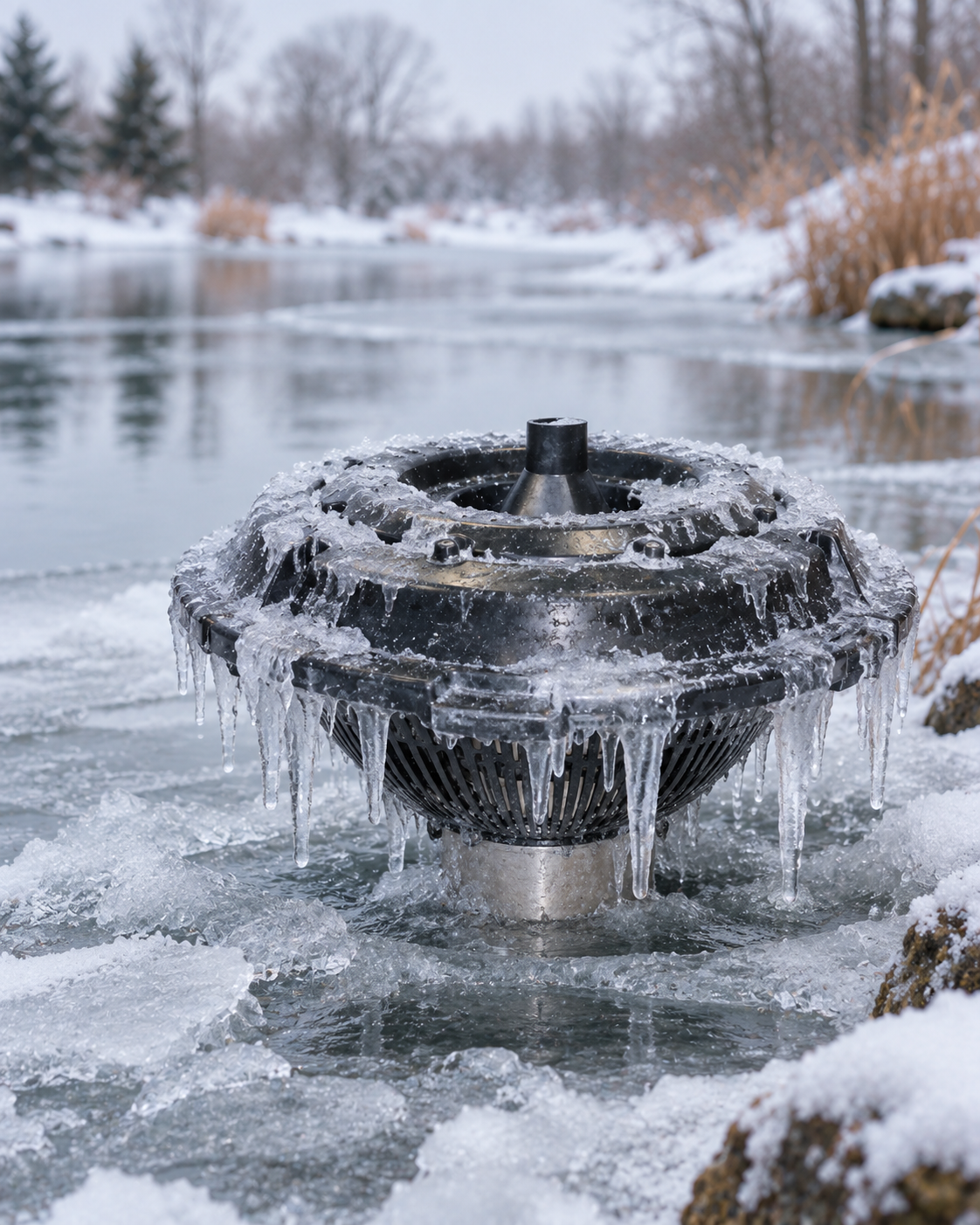
Spray freezes in the air. A fountain throws water up. In cold weather that water can freeze before it lands, and ice builds up on the unit until it is heavy enough to tip or sink it, or put a load on the motor.
Ice can crush the float. Even if you shut a fountain off and leave it, the ice around it expands and contracts. That can crack or damage the float and put stress on the cord.
Neither one is a good surprise to find in spring.
What Water Temperature Should I Watch For?
Go by your climate, not the calendar. The goal is to have the unit out before the pond skins over with ice. A good rule is to plan it for when nights are regularly dropping to freezing and water temperature is falling toward the 40s.
|
Where you are |
Plan |
|
Cold North |
Pull it as soon as nights start hitting freezing, usually well before the first hard freeze |
|
Middle of the country |
Pull it when hard freezes show up in the forecast, and keep a plan for thin ice |
|
Deep South and Gulf |
Most ponds never freeze, so many owners leave units in. Check your manufacturer's guidance |
|
West Coast and Desert Southwest |
Same as the South, except higher elevation ponds that freeze should follow the Cold North plan |
Not sure where you land? Ask us. Tell us your zip code and whether your pond freezes.
How Do I Take a Floating Fountain Out of the Pond?
-
Pull it before the ice, in good weather. A calm day makes this much easier than a windy, freezing one.
-
Unplug it first. Turn the power off at the source and unplug the cord before you handle the unit.
-
Bring it to shore. Use the retrieval line or a boat. On a big pond, ask a second person to help with a heavy unit.
-
Clean it right away. Wet deposits wash off a lot easier than dry ones. Scrub the motor housing, the float and the fountain head or prop. A clean unit also cools properly when it runs.
-
Check the anode. Many units have a sacrificial anode that protects the motor from corrosion. Replace it when it is about half its original size or visibly corroded.
-
Inspect the power cord. Look for cuts, gnaw marks or damaged insulation. Replace the cord if it is damaged.
-
Check your service schedule. Kasco recommends replacing the seal and oil every 3 to 5 years. Off season is the best time to do it, before the spring rush.
How Should I Store My Pond Fountain for Winter?
-
Store it in a space that stays above freezing, like a garage or basement. It does not need to be warm.
-
Store it upside down, nozzle or prop end down and the motor can side up. That keeps oil in contact with the seals so they do not dry out.
-
Coil the cord loosely and keep it off the floor.
-
Put a tag on it with the date of its last service.
Do I Have to Take It Out If My Pond Does Not Freeze?
Not always. In the Deep South, along the Gulf and in the desert Southwest, many ponds never get a hard freeze, and owners leave fountains running year round. Even there, a surprise cold snap can ice a unit. Check your manufacturer's guidance, and if you are not sure, ask us.
What Can I Use Instead of a Fountain in Winter?
If your pond freezes and you want to protect it, you have two good options.
Winter aeration. Aeration keeps an area of open water, which lets gas out and oxygen in. This is what protects fish from winterkill, and it is a better fit for most ponds and lakes than a fountain. If you run a bottom diffuser in summer, move it up to shallower water in winter, about half the original depth. Our guide on aerating your pond during the winter goes through it. Browse by size:
Not sure of the size? Read What Size Aerator Do I Need for My Pond?.
A deicer. A deicer keeps a patch of water open around the unit. It does not keep a whole pond open, but it protects docks, piers, boat houses and seawalls from ice, and it gives gases a place to escape. Kasco makes the ones we carry in three sizes: 1/2 HP, 3/4 HP and 1 HP.
Open water means thin ice around it. Post warning signs so people, kids, pets and snowmobiles stay clear.
What Is the Difference Between a Fountain and an Aerator in Winter?
A floating fountain sprays water into the air, which is great in summer but is the reason it should come out of a freezing pond. A diffused aeration system puts air at the bottom of the pond, with nothing sitting on the surface to ice up, which is why it works through the winter. If you are weighing the two, read The Difference Between Aerating and Decorative Fountains and Are Floating Pond Fountains Worth It?.
When Do I Put the Fountain Back in the Pond?
When the ice is gone and the water is above freezing, usually in early spring. Before you put it back in, check the cord, the anode and the float, and make sure the unit runs on shore for a few seconds with the power safely set up. Then set it back in the water, hook it up and check that it is spraying evenly.
Time to Upgrade or Replace Your Fountain?
Off season is the best time to shop. You can swap an older unit for a new one, add lights, or move up to a larger unit for more aeration. Browse:
Need a part or not sure what you have? Tell us the brand and model, and we will help you find the right one.
Not Sure What Your Pond Needs?
Click the Ask Our Pond Pro button in the bottom right corner of any page on thepondshop.com. Tell us your pond's size and depth, what fountain or aerator you have now, and whether your pond freezes, and we will help you match a winter setup.
Call: (800) 527-9420 Email: sales@thepondshop.com Follow us on Facebook and Instagram for daily pond tips and product spotlights.
We ship nationwide.
Frequently Asked Questions
When should I take my pond fountain out for winter?
Take it out before the pond freezes. Kasco recommends pulling a floating fountain or aerator for the whole winter in cold areas that get an inch or more of ice, and doing it well before the freeze.
What happens if I leave my fountain in a frozen pond?
Spray can freeze in the air and build ice on the unit until it tips, sinks or strains the motor. Ice around a shut off unit can also crack the float and stress the cord.
How do I store a pond fountain for winter?
Clean it, check the anode and cord, and store it indoors in a space above freezing. Store it upside down, nozzle or prop end down, so oil stays on the seals.
Do I need to remove my fountain if my pond does not freeze?
Often not. Many ponds in the Deep South, the Gulf and the desert Southwest never freeze. Check your manufacturer's guidance, since a surprise cold snap can still ice a unit.
What can I use instead of a fountain in winter?
Diffused aeration keeps open water and oxygen going all winter with nothing on the surface to ice up. A deicer keeps a patch open around docks and structures.
How often should I service a Kasco fountain?
Kasco recommends replacing the seal and oil every 3 to 5 years. Off season is the best time to do it.
When do I put my fountain back in?
Once the ice is gone and the water is above freezing, usually early spring. Inspect the cord, anode and float first.


