To keep pond water healthy over winter, get as much organic matter out as you can before the ice forms, keep cold water bacteria working on what is left, and keep a patch of open water so gas can escape and oxygen can get in. A frozen pond is not a sleeping pond. Under the ice, leaves, dead weeds and muck keep rotting, fish and plants keep using oxygen, and gases build up with nowhere to go. What you do in the next few weeks decides what the water looks and smells like when it thaws. Here is how to handle it for backyard ponds, farm ponds and lakes.
What Happens to Pond Water Under the Ice?
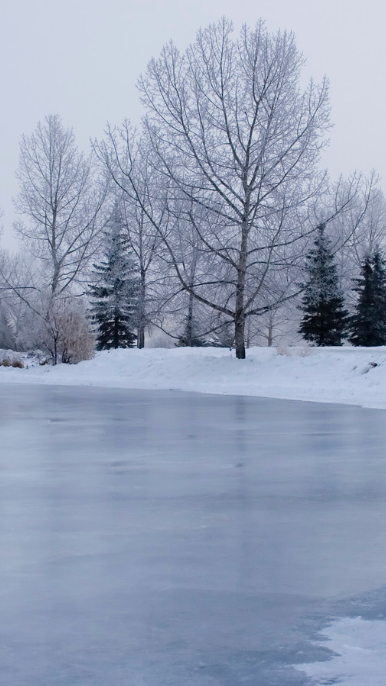
Ice seals the surface. Oxygen cannot get in from the air, and gases cannot get out. In summer, plants and algae make most of a pond's oxygen, but in winter, snow and ice cut off sunlight, so they stop making it and start using it. Meanwhile, everything that settled on the bottom in fall keeps breaking down. Cold slows that down, but it does not stop it, and it uses oxygen as it goes.
When oxygen runs low, the bottom of the pond can turn anaerobic. That is when you get carbon dioxide, methane and hydrogen sulfide building up. Hydrogen sulfide is the rotten egg smell. It is also toxic to fish.
The short version: the more muck and dead plant material going into winter, the more pressure on the water under the ice.
What Are the Warning Signs of Poor Water Quality in Winter?
- A rotten egg smell when ice opens up or when you drill or break through
- Brown or tea colored water coming up near an outflow
- Fish gathering at any open water, or gasping at the edge of the ice
- Cloudy, murky water when the ice melts in spring
As a rule of thumb, extension and pond management sources suggest dissolved oxygen stays above about 5 ppm to avoid fish stress and winterkill, and ammonia stays below 1 ppm. If you can smell hydrogen sulfide, something is wrong. If you see fish gasping, read Why Are My Fish Gasping at the Surface?.
What Should I Do Before the Pond Freezes?
1. Get the leaves and dead plants out. This is the cheapest water quality tool you have. Everything you pull out now is muck you do not have under the ice. A Lake Rake works on a pond of any size, and unlike cover netting, it works on large water. Our guide on removing dead vegetation shows how.
2. Treat the muck that is left. Bio-Buster Pond Muck Reduction Pellets sink to the bottom and keep working in water as cold as 38°F. Pair them with Cold Water Bacteria Liquid once the water cools to 50°F, because regular bacteria slow down. If you want one kit, the Bio-Pack Natural Pond Treatment Kit comes in 1/4, 1/2 and 1 acre sizes and includes Bio-Buster, Bio-Clear LQ, a bacteria product with cold water strains, and pond dye. Always follow the label for dosing. More on timing: When to Switch to Cold Water Bacteria. For the full muck story, read How to Remove Muck From a Pond.
3. Swap your barley straw. Fresh barley straw is in place and ready when the water warms, which helps keep spring algae in check. See When to Replace Barley Straw in Your Pond.
4. Stop feeding when the water gets cold. Below about 50°F, fish barely eat. Food that sits uneaten rots and uses oxygen.
5. Skip big weed or algae treatments in cold water. A large die off right before ice up is a big pile of rotting plants using oxygen all winter. If you are unsure whether a treatment makes sense at your water temperature, ask us before you apply, and always follow the label.
How Do I Keep Oxygen Up and Gases Out During Winter?
You need an opening in the ice. There are two ways to get one.
Aeration. A system that keeps an area of open water lets oxygen in and gases out. If you run a bottom diffuser in summer, move it to a shallower spot for winter, about half the original depth, so it does not chill the whole pond. Drilling a few holes in the ice will not do the job, so plan for real aeration. Our guide on aerating your pond during the winter goes through it. Browse by size:
- Aeration systems for ponds up to 1 acre
- Aeration systems for ponds up to 2 acres
- Vertex Air2 XL2 Aeration System
Not sure of the size? Read What Size Aerator Do I Need for My Pond?.
Deicer. A deicer keeps a patch of water open around the unit. It does not keep a whole pond open, but it gives gases a place to escape and protects docks, piers and boat houses from ice. Kasco makes the ones we carry in three sizes: 1/2 HP, 3/4 HP and 1 HP.
Open water means thin ice around it. Post warning signs so people, kids, pets and snowmobiles stay clear.
Can I Clear Snow Off the Ice to Help?
On a small pond, yes, if the ice is thick enough to hold you. Clearing part of the surface lets sunlight in so plants can make oxygen. Extension specialists suggest keeping around 30% of the ice clear of long lasting snow. On a big pond or lake that is not realistic, which is another reason aeration matters for larger water. When in doubt, stay off the ice.
How Do I Check My Water Quality in Winter?
A thermometer is the easy one. An Aquascape Submersible Pond Thermometer tells you when to switch bacteria and stop feeding. If you want to test water, do it before the freeze and again at ice out, so you know what changed. Watch for dissolved oxygen, ammonia and pH. If something looks off, tell us what you are seeing and we will help.
How Does Winter Water Quality Differ in My Part of the Country?
The steps stay the same. What changes is how long the ice stays and how much you need to do. Go by your own water temperature.
Cold North (Michigan, Minnesota, Wisconsin, New York, New England, Idaho, Montana, Colorado): Ponds freeze hard and stay frozen for months, so this is where trapped gas and low oxygen are the biggest risk. Clean out early, treat muck, and get aeration or a deicer in before the first freeze.
Middle of the Country (Pennsylvania, Ohio, Missouri, Kansas, Oklahoma, Virginia, the Carolinas, Tennessee): Ice comes and goes, and temperature swings can cause fall turnover and cloudy water. Keep bacteria going on the milder days and have aeration ready for the cold ones.
Deep South and Gulf (Georgia, Alabama, Louisiana, Texas, Florida): Most ponds never freeze, so trapped gas is not the concern. Water quality problems here come from leaves and warm spells, so keep up with raking, bacteria and aeration.
West Coast and Desert Southwest (California, Oregon, Washington, Arizona): Mild winters, with wet weather in the Northwest washing leaves and runoff into ponds. Raking and cold water bacteria matter most. Higher elevation ponds that freeze should follow the Cold North advice.
What Should I Do When the Ice Melts?
Watch for cloudy water and a smell as the pond turns over in spring, which is normal after a long winter. Keep cold water bacteria going until the water holds above 50°F, then switch back to your regular treatment. Our spring pond opening checklist covers the rest.
Not Sure What Your Pond Needs?
Click the Ask Our Pond Pro button in the bottom right corner of any page on thepondshop.com. Tell us your pond's size and depth, whether you have fish and how cold it gets, and we will help you match a setup.
Call: (800) 527-9420 Email: sales@thepondshop.com Follow us on Facebook and Instagram for daily pond tips and product spotlights.
We ship nationwide.
Frequently Asked Questions
How do I keep my pond water clean in winter? Remove leaves and dead plants before the freeze, treat muck with Bio-Buster and cold water bacteria, stop feeding when the water gets cold, and keep a patch of open water with aeration or a deicer so gas can escape and oxygen can get in.
What happens to pond water under ice? Ice seals the surface, so oxygen cannot get in and gases cannot get out. Plants stop making oxygen, and rotting material keeps using it. Carbon dioxide, methane and hydrogen sulfide can build up.
Why does my pond smell like rotten eggs in winter? That is usually hydrogen sulfide from decaying material in low oxygen water. It is a sign the bottom has gone anaerobic and fish may be at risk.
Do I need bacteria in my pond in winter? Cold water bacteria keep working on muck when regular bacteria slow down. Switch to a cold water formula once the water cools to 50°F, and follow the label.
Should I run my aerator all winter? In areas where the pond freezes, run it once ice starts to form so it keeps open water. Some owners shut it off when the pond is open. Follow the manufacturer's guidance for your system.
Can I clear snow off my pond? On a small pond, yes, if the ice is thick enough. Clearing part of the surface lets sunlight in. On a large pond or lake, aeration is the more realistic fix.
What should I check when the ice melts? Watch for cloudy water and smell as the pond turns over. Keep cold water bacteria going until the water stays above 50°F, then switch to your regular treatment.


